How We Work Remotely And Boost Productivity From Anywhere
Discover how we work remotely with proven strategies, tools, and workflows. Learn to empower your team and boost productivity from anywhere.

On this page (7)
Working remotely isn't just about swapping your office for a home desk; it’s a whole new way of thinking about work itself. The focus shifts from hours clocked in a chair to the actual results you produce, giving teams the freedom to do great work from anywhere.
The Permanent Shift To Remote Work
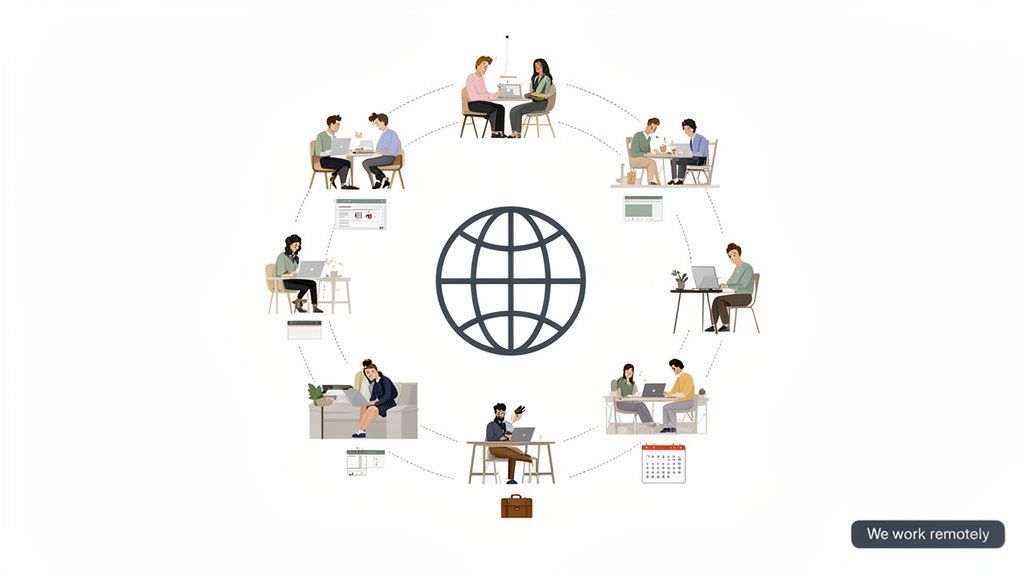
The idea of working from home has moved way past being a temporary fix or a nice-to-have perk. For many forward-thinking companies, it’s now a core business strategy. This isn't just a trend; the data shows that organizations that truly embrace remote work are gaining a serious competitive edge.
So, why are so many leaders deciding "we work remotely"? The reasons are as practical as they are powerful.
Tapping Into a Global Talent Pool
When you're no longer limited by geography, you can hire the best person for the job, period. It doesn’t matter where they live. This opens up a world of expertise that was previously out of reach, letting you build a stronger, more diverse team. This is a huge deal for specialized roles in marketing or tech.
For a dynamic social media team, this global access is a game-changer. Imagine having a content creator based in a key market, giving you real-time insights and culturally relevant posts on the fly. That’s the kind of agility remote work makes possible.
A Focus on Genuine Work-Life Balance
The daily commute, rigid office hours, and constant "shoulder taps" are being replaced by something far more valuable: autonomy. Remote work gives your team control over their schedules, empowering them to work when they’re most productive and actually integrate their personal and professional lives.
This focus on employee well-being isn't just good for morale; it's smart business. Companies offering remote flexibility often see higher retention rates. Plus, studies show employees can save up to $12,000 a year by skipping the commute and other office expenses.
Ultimately, saying "we work remotely" signals a commitment to a modern, results-driven culture. For social media teams using smart tools to plan and automate their content, this model provides the uninterrupted focus needed to create high-impact campaigns. It’s a permanent shift that fosters growth, agility, and a healthier, more productive way of working.
Building Your Remote Team's Foundation For Success
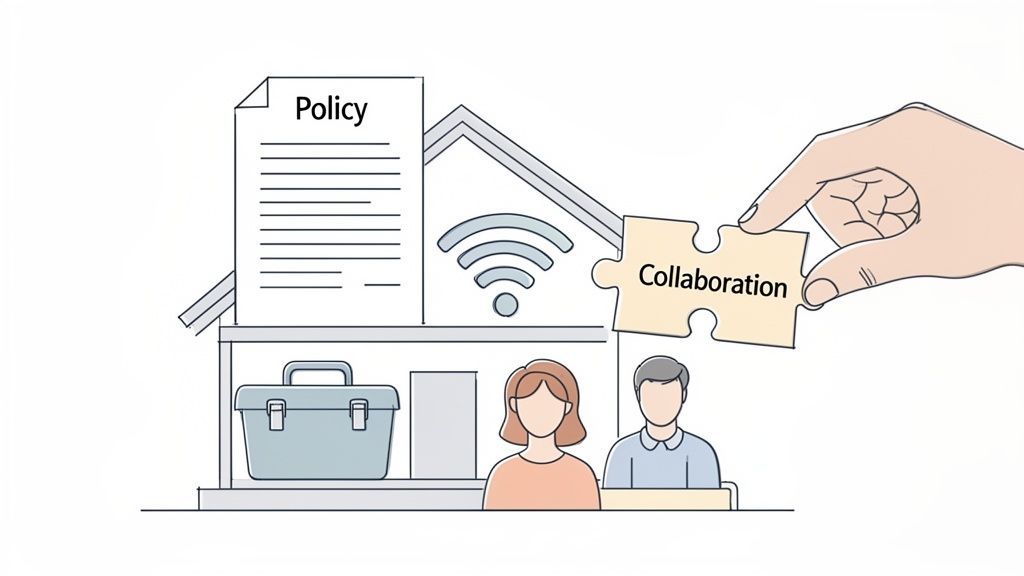
When a team says, "we work remotely," they're not just picking a new place to put their laptops. It's a strategic shift. They are choosing efficiency, autonomy, and the freedom to hire the best people, no matter where they live. But making this work takes a solid foundation, just like building a house.
You wouldn't build a house without a blueprint, the right materials, or a crew that knows how to work together. The same goes for a remote team. Get the core elements right from the start, and you will avoid a lot of headaches down the road.
The Core Pillars of Remote Success
A healthy remote setup really comes down to three things. Each one supports the others, creating a structure where your team can actually get things done and not just sit on endless video calls.
- Clear Communication Protocols: Figure out how you talk and when. Is it a quick chat on Slack? A detailed update in your project tool? Or a classic email? Decide this upfront so nobody is left guessing.
- A Culture of Trust and Accountability: It is not about how many hours someone is online; it is about what they deliver. Give your team the freedom to manage their own work, and trust them to get it done.
- The Right Technology Stack: Your tools should make collaboration feel easy, not like a chore. This means having the right platforms for communication, project management, and anything specific your team needs, like social media scheduling.
A strong foundation isn't just about internal policies. It's about a global mindset. As remote work becomes more common, countries are adapting to attract this modern workforce.
This global shift is opening up some incredible opportunities. Take Bulgaria, for example. It opened a digital nomad visa in December 2025 for remote workers earning their income from outside the country. It is perfect for content creators and marketing teams who can manage social media from anywhere, giving them a legal way to live and work in a beautiful European country. Our Bulgaria digital nomad visa guide covers the eligibility categories, the income floor and the application steps.
Having the right people in place to manage these new workflows is also a huge piece of the puzzle. A great content manager assistant can act as the glue that holds everything together, keeping projects moving and everyone in sync. Nail these foundational pieces, and you're well on your way to building a remote team that’s productive, happy, and successful.
Overcoming Common Remote Work Challenges
While the upsides are huge, switching to a "we work remotely" setup isn't always smooth sailing. Every team bumps into a few common hurdles, no matter how good they are. The good news? These are not dead ends. They are well-known problems with practical fixes.
Spotting these issues early is your first move toward building a solid, successful remote team. If you're proactive, you can turn weak spots into strengths that keep your team healthy and productive for the long haul. The three biggest areas to watch are communication, culture, and your team's well-being.
Navigating Communication Silos
When you're not in the same room, it's easy for communication to splinter. Key info gets buried in DMs, or people on different projects lose sight of the big picture. This creates silos where no one knows what anyone else is doing, leading to wasted effort and confusion.
To beat this, you have to be deliberate about how and where your team talks. Set clear rules for your tools: what belongs in the main chat, what's for a project management board, and what needs a video call? Regular, structured check-ins like daily stand-ups or weekly syncs are non-negotiable for keeping everyone on the same page.
Keeping Company Culture Alive
A great company culture doesn't just happen, especially when everyone is scattered. Those random chats by the coffee machine or team lunches that build real connections have to be recreated online. Without that effort, your team can start to feel more like a group of freelancers than a tight-knit crew.
Preserving culture from a distance requires deliberate action. It's about creating shared experiences that bring people together, even when they're physically apart.
To keep your culture buzzing, plan regular, non-work virtual get-togethers. It could be anything from a monthly online game to a virtual coffee break or even a "show and tell" where people share their hobbies. Having informal chat channels for things like pets, music, or travel also helps colleagues connect as people, which builds trust and boosts morale.
Preventing Remote Work Burnout
One of the biggest ironies of remote work is the risk of overworking. The line between home and the office gets blurry. Without the clear signal of packing up and leaving, it is all too easy to stay logged on way too long. This "always-on" vibe is a fast track to burnout.
Managers need to lead by example here, respecting work hours and encouraging their teams to fully switch off. For teams spread across different time zones, this is especially critical. If you need a hand with that, our guide on understanding time zones like US EST is a great resource. Tools can also be a huge help; a good social media scheduler automates posts so your team can plan content without being chained to their keyboards.
The Essential Tech Stack For Remote Teams
When you're working remotely, the right tech isn't just a nice-to-have; it's the very office you walk into every day. It's the conference room, the hallway, and the water cooler, all rolled into one digital space. Think of it like a builder's toolkit. You might have a brilliant plan and a skilled crew, but without the right tools, you can't build the house.
A remote team’s effectiveness is a direct reflection of its tech stack. The goal isn't to pile on more software, but to choose tools that make collaboration feel completely natural, almost invisible. It really all boils down to getting three core categories right.
Core Remote Work Tool Comparison
Every remote team, no matter the industry, builds its workflow on a foundation of communication, project management, and collaboration tools. Here's a quick breakdown of what each category does and what to look for when choosing your own stack.
| Tool Category | Primary Function | Key Features to Look For |
|---|---|---|
| Communication Platforms | Real-time chat & team connection | Channels, direct messaging, integrations, search history |
| Project Management | Tracking tasks & project progress | Kanban boards, task assignments, deadlines, progress views |
| Collaboration Hubs | Centralized document & creative work | Real-time co-editing, version history, commenting, role-specific features |
This combination creates a digital headquarters where everyone knows what's happening, what they're responsible for, and where to find the information they need to get their work done.
Communication, Project Management, and Collaboration Tools
Every great remote team I've seen runs on a solid trio of tools that keep everyone connected and productive. The specific names might change, but their functions are universal.
-
Communication Platforms: This is your virtual HQ. Tools like Slack or Microsoft Teams are non-negotiable for instant chats, quick check-ins, and company-wide updates. They replace that quick "tap on the shoulder" you'd get in a physical office.
-
Project Management Software: To keep projects moving, you absolutely need a single source of truth. Platforms like Asana, Trello, or Jira help everyone track tasks, manage deadlines, and see who owns what. This kind of transparency is critical when you can't just glance across the room to see who’s busy.
-
Collaboration Hubs: This is where the work actually gets done. It includes everything from shared document editors like Google Workspace to more specialized, role-focused platforms.
For social media teams, this collaborative hub is especially important. Juggling multiple accounts, getting content approved, and scheduling posts can get messy fast. This is exactly why a unified tool like PostFast exists. Features like team workspaces, in-post comments for quick feedback, and shared visual calendars bring order to the chaos. They make client approvals painless and ensure everyone is on the same page. Our guide on social media tools to improve your workflow has more ideas on this.
This tight focus on collaborative software is becoming even more critical as work itself evolves. The right tech doesn't just enable remote work; it optimizes it.
We're seeing this play out in the job market right now. By early 2026, remote and hybrid roles in Bulgaria are expected to grow, especially in marketing and tech, building on a 30% jump in remote positions from 2025. This shift is a perfect fit for teams using visual calendars and content history to plan their posts. In fact, some agencies are saving 10+ hours a week on client management alone by using these platforms. You can dig into these labour market forecasts on Novinite.com for more details.
Designing Workflows That Actually Work Remotely
Having the right tools is a great start, but it’s only half the battle. Real remote success hinges on having intentional workflows. When you say, "we work remotely," you're not just talking about software; you're promising a clear, structured process that shows how work gets done, no matter where anyone is logging in from.
Think of it like choreographing a dance. Each dancer knows their part, when to move, and how their actions connect with everyone else's. Without that choreography, you just have a bunch of people moving randomly on a stage. It’s the exact same for remote teams; your workflows are the choreography for your daily tasks.
This all begins with establishing clear policies that everyone can get behind. These aren't meant to be rigid rules but shared agreements that cut through the noise and eliminate confusion.
- Define Core Working Hours: Even with flexibility, it's smart to have a few overlapping hours when everyone is guaranteed to be online. This is crucial for real-time collaboration, especially for teams spread across different time zones.
- Set Communication Protocols: Create simple guidelines for which tool to use for what. For example: chat for quick questions, email for formal updates, and your project management tool for all task-specific discussions.
- Establish a Results-Focused Culture: Shift the focus from hours logged to outcomes delivered. This builds trust and gives your team the autonomy to manage their own time, leading to better work and higher morale.
These policies create a simple framework where everyone knows the expectations. It allows for more autonomy and less micromanagement, creating a system where productivity just happens.
A Social Media Workflow In Action
Let's make this tangible. Imagine a remote social media team managing a handful of client accounts. Here’s how they could use a structured workflow inside a platform like PostFast to plan, approve, and schedule a full month of content without breaking a sweat.
- Planning in the Visual Calendar: The process kicks off in a shared visual calendar. The social media manager maps out key themes, campaign dates, and post types for the month, giving everyone a bird's-eye view of the strategy.
- Content Creation and Internal Review: Individual creators draft their posts right inside the platform. They can use in-post comments to ask questions or get quick feedback from the manager, keeping every conversation tied to a specific piece of content. No more digging through Slack threads.
- Client Approval Loop: Once a post is ready for the client, the manager simply changes its status. The client can then log in, see only the content that needs their eyes, and approve it with a single click.
- Scheduling and Automation: After approval, the posts are dropped into a smart queue. The system automatically publishes them at the best times for engagement, which means no one has to be online to manually hit "publish."
This clear, step-by-step process turns what could be a chaotic mess into a smooth, predictable operation.
Workflows are the engines that power remote productivity. When designed well, they don't just organize tasks; they connect people, tools, and goals into a single, cohesive system that produces consistent results.
The diagram below shows how communication, management, and collaboration are the three pillars of any effective remote process.
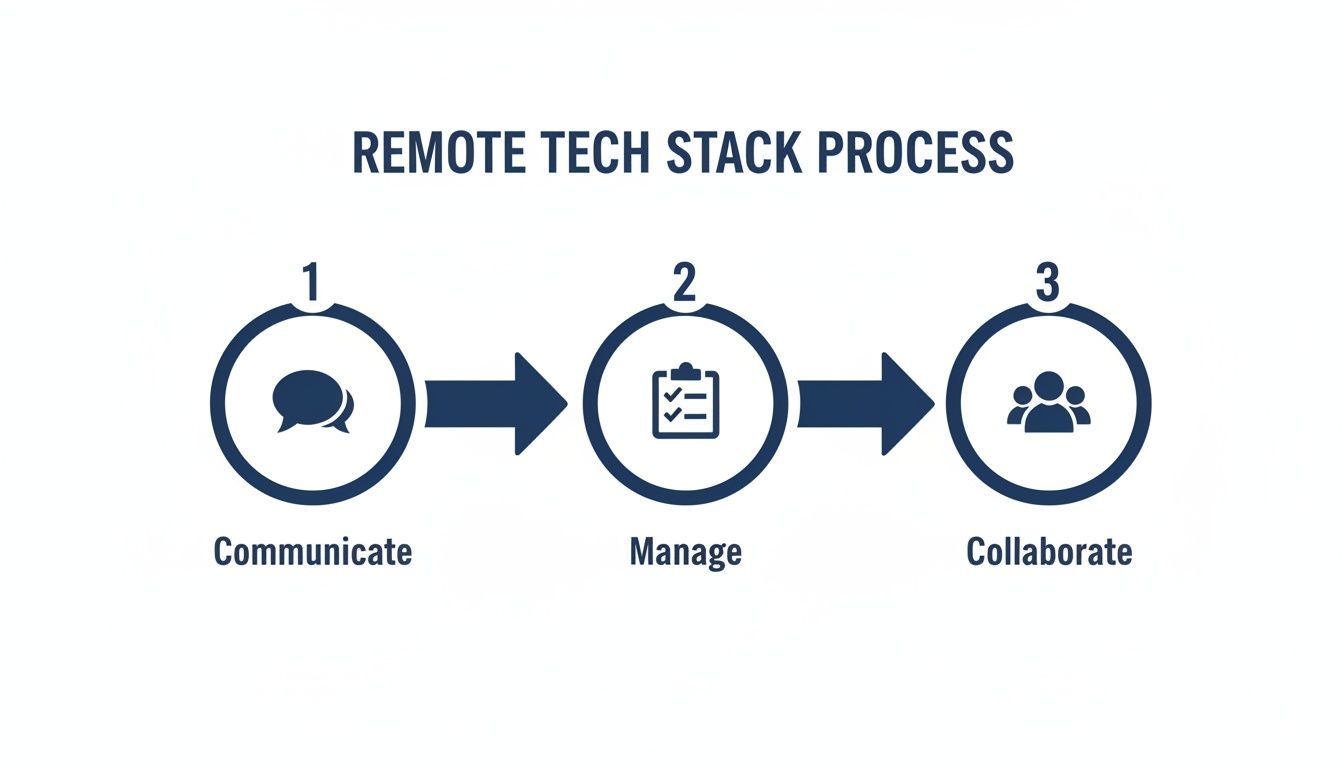
This visual really drives home that successful remote work isn't about one thing, but an integrated system. Good communication feeds into project management, which then makes real collaboration possible.
The need for this kind of efficiency is only growing. Remote positions in places like Bulgaria, for instance, shot up by 30% in 2025. This surge, especially in IT and marketing, means content creators can queue up weeks of posts automatically, even from rural areas. Meanwhile, the platforms handle the admin load, cutting hiring times by 20%.
Measuring Performance and Success in a Remote Setting
So, how do you know if your remote strategy is actually working? When your team is spread out, the old way of measuring success, like seeing who’s at their desk the longest, is completely irrelevant. The focus has to shift from tracking hours to tracking results.
This change takes trust, of course. But it also demands a clear, data-driven way to measure performance. For leaders, this means letting go of old habits and focusing on what truly matters: the quality and impact of the work being delivered.
Defining Your Remote Key Performance Indicators
To really measure success, you need to look beyond simple activity metrics. When you say, "we work remotely," your success should be defined by the outcomes your team achieves, not the time they spend online.
These indicators, or KPIs, give you a clear picture of how the team is doing.
- Project Completion Rates: Are projects being finished on time and within scope? This is a straightforward look at your team's efficiency and planning.
- Client Satisfaction Scores: How happy are your clients? Metrics like a Net Promoter Score (NPS) or simple feedback surveys give you direct insight into the quality of your work.
- Employee Engagement Levels: Regular pulse surveys can track morale and spot potential burnout before it becomes a problem. A happy, engaged team is almost always a productive one.
The most important principle is to measure what matters. For a remote team, this means focusing on tangible results that align directly with your business goals. It builds a culture of accountability and autonomy.
For a social media team, these KPIs get even more specific and powerful. Success isn't about how many posts were created; it's about how well they performed. This is where tracking content performance is a must.
For instance, a unified platform like PostFast has built-in analytics that show real-time engagement, reach, and conversion rates. This lets managers see exactly which campaigns are hitting the mark, connecting the team's remote efforts directly to business value. This data-first approach proves that when we work remotely, we can be more effective than ever.
Frequently Asked Questions About Remote Work
As more companies lean into a "we work from anywhere" mindset, the same questions pop up over and over. Here are some straightforward answers to the most common ones we hear from leaders and their teams.
How Do We Keep Our Company Culture Alive?
You cannot just let culture happen by accident when you are remote; you have to build it intentionally. The key is creating deliberate moments for connection. Think virtual coffee chats, online team-building games, and dedicated chat channels for non-work stuff like hobbies, travel, or pets.
Publicly celebrating wins and making sure your company values are woven into every digital message is also a must. When leadership communicates with transparency and consistency, everyone feels plugged into the bigger mission.
What’s the Best Way to Manage a Hybrid Team?
When you are managing a mix of in-office and remote staff, your number one job is to ensure fairness and equal opportunity for everyone. Make virtual meetings the default for everything; that way, remote employees are never just a face on a screen in a room full of people.
The biggest trap in a hybrid model is proximity bias. This is our natural tendency to favor people we see in person. To beat it, you have to measure performance purely on output and results, not on who shows up at the office. This is how you build real trust and equality.
Using shared digital tools for all project management also creates a single source of truth, so everyone is on the same page, no matter where they are.
Where Can I Find Real Remote Jobs?
This is a big one for anyone looking to start a remote career. The best advice is to stick with trusted sources to sidestep scams. Thankfully, there are now lots of great platforms dedicated to helping you find remote jobs from verified, legitimate companies.
Which Tools Are Must-Haves for a New Remote Team?
A brand-new remote team really only needs three core tools to get going: a communication hub like Slack, a project management tool like Asana, and a collaborative document editor like Google Workspace.
For more specialized teams, like social media managers, a unified platform becomes non-negotiable. It is the only sane way to handle planning, scheduling, and analytics without juggling a dozen different native apps and spreadsheets.
Ready to streamline your social media from anywhere? PostFast gives you a single, clean dashboard to plan, approve, and automate your content across every major platform. Start your 7-day free trial today and see how much time you get back.
Related
Captions for Instagram: How to Write Them with AI (+ 60 Templates)
Learn how to write captions for Instagram that get engagement. 10 caption formulas, AI prompts, 60 ready-to-use templates, and scheduling tips.

Your Guide to a Smooth Digital Pro Login
Digital Pro Login: Need help signing in? Get digital pro login tips, password resets, and fast, secure access to your account.
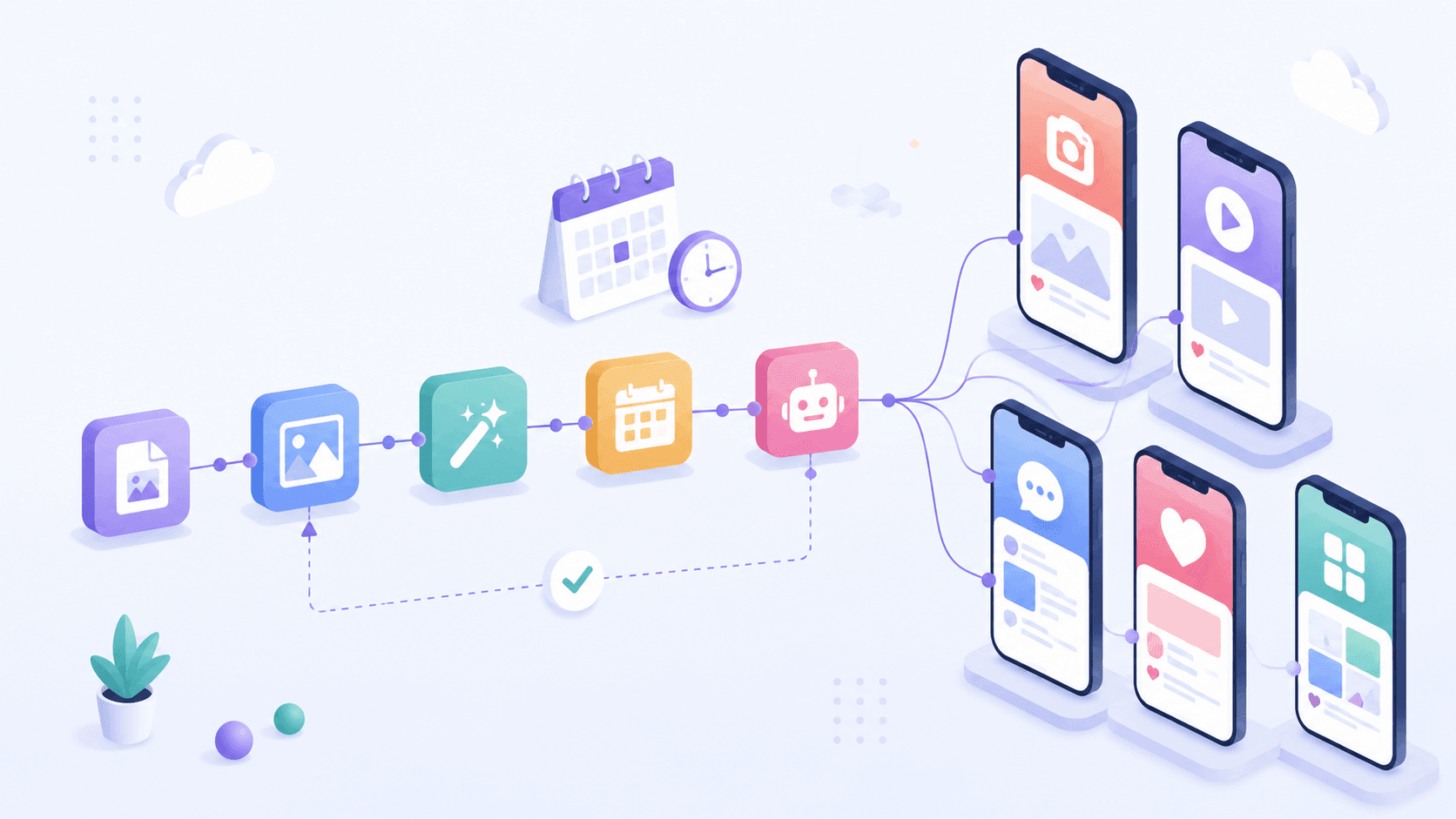
How to Automate Social Media Posting with n8n (Free Templates + Verified Node)
Automate social media posting with n8n: install the verified PostFast node, start from free templates, upload media, schedule carousels, and add approval.
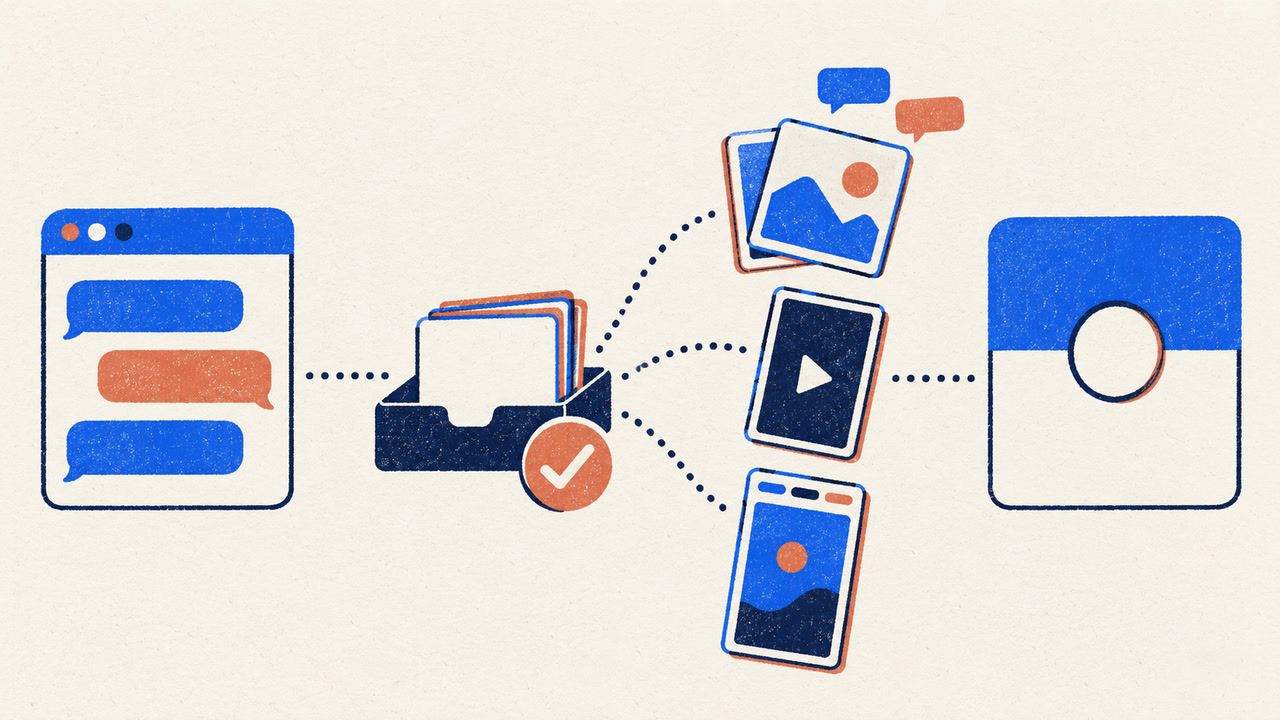
How to Connect Claude to Facebook Pages: Post, Schedule, Reply
Connect Claude to your Facebook Page with a connector: schedule posts, Reels and Stories, answer comments, and approve before anything goes live.