10 Ways to Make Money with AI in 2026 (Ranked by Realism)
The ways to make money with AI in 2026 that actually work, ranked by realism: AI-powered services, content systems, products and the traps to skip.

On this page (13)
Most "make money with AI" lists are written by people whose only AI income is the list itself. So here is a different framing: AI does not create income, it multiplies output. Every real AI income story in 2026 is a normal business model, services, content, products, run faster and cheaper by one person with good tools. The money follows the model, not the model's demo video.
Below are ten ways to make money with AI this year, ranked roughly by how realistic they are for a normal person starting now, with honest effort levels and the traps each one hides.
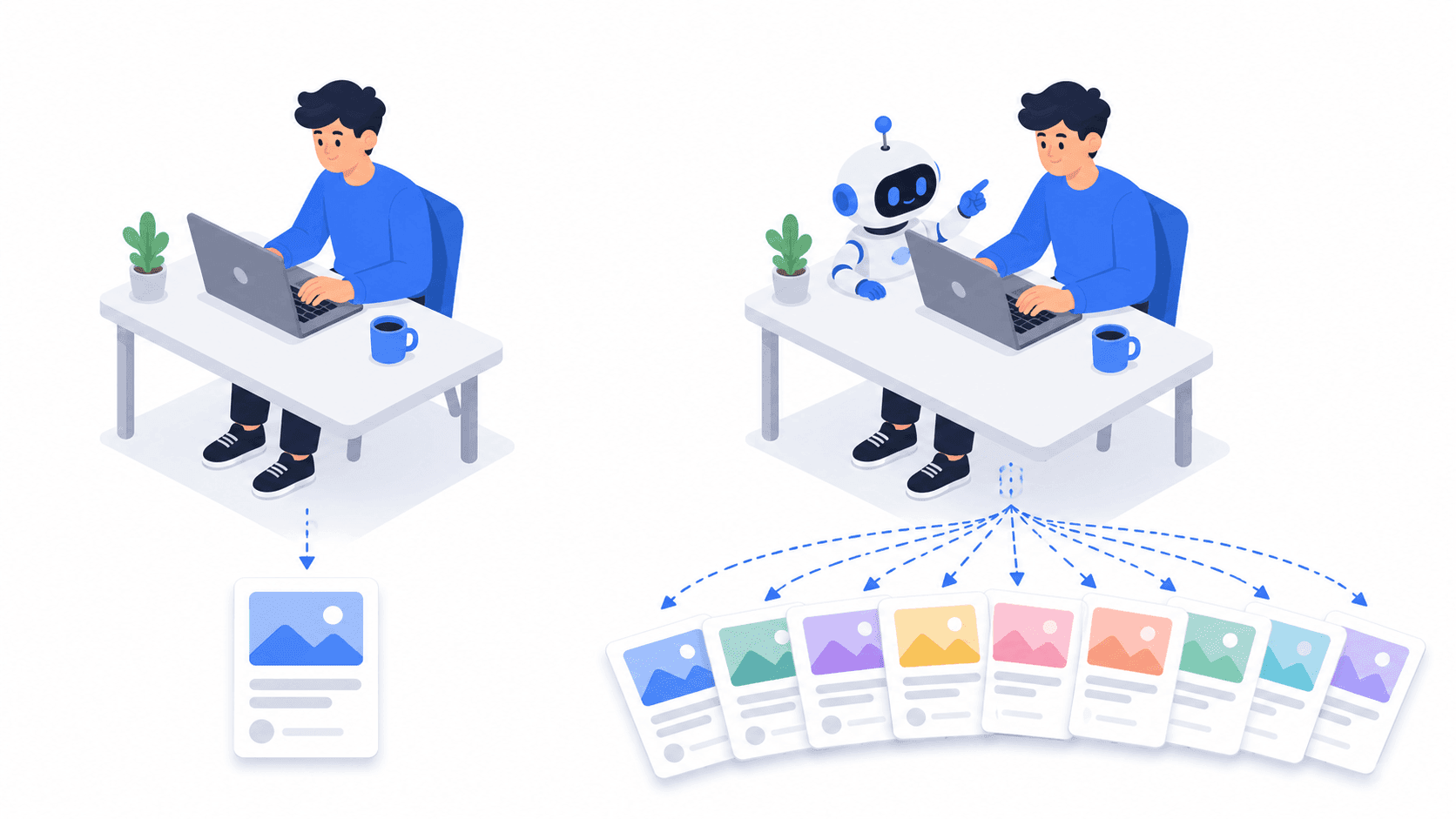
1. AI-Powered Social Media Management (the most underrated one)
Every local business knows it should post consistently and almost none do. With today's stack, one person can run social for 5 to 15 small clients: AI drafts the posts and images, you add judgment and brand voice, and a scheduler publishes everything at the right times across platforms. Charging $300 to $1,000 per client per month is normal for this work, which means a solo operator with 6 clients clears a real income.
The workflow that makes it scale: batch a month of content per client in one sitting with an AI assistant, then schedule the whole batch in one pass. This is exactly what PostFast's ChatGPT and Claude connectors are built for, you can literally tell the assistant what the client needs and have it draft, schedule and manage the calendar through one connection. One person, agency output.
Effort: medium. Ceiling: high. Trap: underpricing. Charge for outcomes (consistent presence, leads), not hours.
2. UGC and Short-Form Content Creation
Brands pay $50 to $300+ per short video they run from their own accounts, and AI has collapsed the production time: scripts, hooks, captions, even b-roll suggestions in minutes. You need zero followers, only a portfolio. Creators who batch UGC with AI assistance produce 3 to 5x the volume, and volume is the whole business.
Effort: low to start. Ceiling: medium. Trap: pure AI output with no human taste reads as slop, and brands can tell.
3. Freelance Services, Supercharged
Copywriting, design, editing, translation, research, ads management. The freelancers earning more with AI are not selling "AI writing", they are selling the same service with double the throughput and using the margin to be cheaper or faster than the market. Platforms are flooded with low-effort AI spam, which perversely makes genuinely good hybrid work stand out more than it did in 2023.
Effort: medium. Ceiling: medium-high. Trap: competing on price against the spam instead of on quality against humans.
4. Faceless Content Channels
Niche video channels and theme pages built on AI-assisted scripts, voiceovers and editing, monetized through creator programs, affiliate links and sponsorships once thresholds are hit. It works, but the math is honest: platform payouts need serious view volume (TikTok's Creator Rewards wants 10,000 followers and 100k monthly views; the full numbers are in our TikTok monetization requirements guide), so this is a months-long compounding play, not a weekend one.
The single biggest lever is consistency: across posts published through PostFast, 40% of active accounts publish 5 or more times a week, and that cohort is the one that reaches monetization thresholds. AI makes the volume possible; scheduling makes it survivable.
Effort: medium, sustained. Ceiling: high but slow. Trap: mass-producing generic content in a saturated niche.
5. AI Automation Services for Small Businesses
The "boring AI" goldmine: intake bots, review responses, email triage, invoice chasing, content repurposing for local businesses that will never build this themselves. Sold as setup fee plus monthly retainer. If you can wire up tools like n8n, Make or Zapier with an LLM in the middle (PostFast plugs into all three, n8n, Zapier, Make), you can sell this today.
Effort: medium-high. Ceiling: high. Trap: building custom snowflakes for every client instead of packaging 2 or 3 repeatable systems.
6. Digital Products Built with AI
Templates, planners, presets, prompt packs, niche e-books, micro-courses. AI compresses production from months to days; distribution is still the hard part, which loops back to building a social audience (see our how to make money on social media breakdown of the eight income models).
Effort: low-medium. Ceiling: medium, occasionally spectacular. Trap: making the product before making the audience.
7. AI-Assisted Affiliate Content
Comparison articles, tutorial videos and tool roundups, researched and drafted with AI, earning 5 to 30% commissions. Search and social both still reward genuinely useful comparisons; they punish unedited AI filler. The winners in 2026 add first-hand testing and real screenshots to AI-accelerated drafts.
Effort: low-medium. Ceiling: medium. Trap: publishing at AI speed without adding anything a model could not have written on its own.
8. Micro-SaaS and Vibe-Coded Tools
AI coding assistants have made it possible for non-engineers to ship small paid tools, and for engineers to ship them in weekends. Small recurring revenue, real learning curve, and the same eternal problem as products: distribution. The builders who win pair the tool with a content engine from day one.
Effort: high. Ceiling: high. Trap: building four half-tools instead of marketing one.
9. Selling AI Skills Directly (Training and Consulting)
Companies pay for someone to show their team what to automate and how. If you have used AI seriously in any domain, packaging that as workshops or consulting is faster to first revenue than any audience play. Credibility comes from documented results, which is another reason to build something public first.
Effort: medium. Ceiling: high per hour, capped by hours. Trap: staying generic ("AI consultant") instead of owning one niche.
10. Licensing Your Content Workflow (the meta-play)
Once any of the above works, the system itself becomes the product: your prompt library, your content pipeline, your client-onboarding flow. Creators sell these as templates, courses or productized services. This only works after something real works, which is exactly why it is ranked last.
Effort: low, later. Ceiling: medium. Trap: teaching a system you never actually ran.
What to Skip in 2026
- Mass AI-slop channels and blogs. Platforms and search have spent two years learning to bury undifferentiated AI output. The arbitrage is gone; taste is the moat.
- "$500/day with one prompt" schemes. If the seller earned that from the method, they would not be selling the method.
- Anything you cannot honestly explain. Reselling AI output in domains you do not understand (legal, medical, finance) is a liability engine.
The Pattern Across All Ten
Every path on this list is some mix of: AI multiplies your output, distribution turns output into income, and consistency compounds distribution. The tools change monthly; that pattern has not changed at all. For the current toolkit itself, our tested rundown of the best AI tools for social media management covers what each layer costs and does. Pick one model, build the AI-assisted version of it, and put the publishing on rails, batch your content weekly, schedule it with an AI assistant through PostFast, and let the streak do the compounding while you improve the craft.
Start your free 7-day trial of PostFast, no credit card required, and give whichever model you pick the consistent distribution it needs.

Frequently Asked Questions
What is the best way to make money with AI in 2026?
For most people, AI-powered services: social media management, UGC creation or freelance work with AI multiplying your throughput. Services pay immediately and need no audience or capital, unlike content channels and products which compound more slowly. The best long-term results come from stacking a service with an owned audience and eventually a product.
Can you make money with AI with no experience?
Yes, by starting where the bar is effort rather than credentials: UGC creation, AI-assisted content for local businesses, or simple automation setups. Expect a real learning phase of one to three months. Skip anything promising instant income; those offers monetize beginners, not AI.
How do people make money with ChatGPT specifically?
Mostly as a production engine inside a normal business model: drafting client social posts, writing UGC scripts, building content calendars, research and first drafts for freelance work. With connector-based setups you can go further and let ChatGPT operate tools directly, for example drafting and scheduling a month of client posts through PostFast's ChatGPT connector.
Is making money with AI saturated in 2026?
The low-effort layer is completely saturated: generic AI blogs, mass-produced videos and prompt-spam. The service layer is not, because it is constrained by trust and taste, not by access to models. Small businesses have more AI curiosity than AI capacity, and that gap is the market.
How much money can you realistically make with AI side hustles?
Honest ranges: AI-assisted UGC and freelance work commonly reaches a few hundred to a few thousand dollars a month within 3-6 months of consistent effort. Service businesses (social media management, automation setups) scale to several thousand monthly with 5-10 clients. Faceless channels and products vary wildly and pay later, but compound if you stay consistent.
What AI side hustle works best alongside a full-time job?
Batch-based ones: UGC creation, affiliate content and social media management for one or two clients. Each can run on a few focused hours weekly if the publishing is scheduled in advance rather than posted live, which is exactly the workflow AI plus a scheduler automates.
Related

TikTok Monetization Requirements in 2026: Every Program Explained
Every TikTok monetization requirement in 2026: Creator Rewards, LIVE gifts, TikTok Shop and the zero-follower paths, with the real thresholds in one table.

YouTube Monetization Requirements for 2027: Qualified Hours, Shorts Views, and a Posting Plan
YouTube's 2027 Partner Program rules explained: 8,000 qualified watch hours or 20 million Shorts views, what counts, and a posting plan to get there.

How to Make Money on Social Media in 2026: 8 Models That Actually Pay
How to make money on social media in 2026: the 8 income models, real platform payout thresholds compared, and the consistency math behind creators who earn.

SaaS Marketing Automation: The Social and Email Stack We Run at PostFast
SaaS marketing automation from our own stack: what we automate on social and in lifecycle email, the event behind each sequence, and the tools by job.