Hermes Agent vs OpenClaw (2026): Which AI Agent Should You Run?
Hermes Agent vs OpenClaw in 2026: adoption, skills, MCP, security, and pricing compared side by side. Plus where NanoClaw fits and how to choose.

On this page (9)
Self-hosted AI agents went mainstream in 2026, and two open source projects own the conversation: Hermes Agent by Nous Research and OpenClaw. Both run on your own server, both talk to you through Telegram or WhatsApp, and both can take real actions on your behalf. Search interest in "hermes agent vs openclaw" has grown triple digits over the past three months, so clearly a lot of people are standing at this exact fork.
I run both. PostFast ships integrations for OpenClaw, Hermes Agent, and NanoClaw, so this comparison comes from someone who maintains working setups on all three, not from a spec sheet. Every number below was checked against the official repos and docs in July 2026.
The Short Answer
Pick Hermes Agent if you want the strongest momentum and a built-in learning loop. It is the fastest growing agent of 2026 and the number one ranked app on OpenRouter. Pick OpenClaw if you want the biggest ecosystem and the most connected chat platforms. It is the original project in this space with 384k GitHub stars and the largest skill marketplace. Pick NanoClaw if you want something small enough to read in an afternoon, with real container isolation per agent.
Here is the full picture:
| Hermes Agent | OpenClaw | NanoClaw | |
|---|---|---|---|
| Built by | Nous Research | Open source community | Community (nanocoai) |
| First released | February 2026 | 2025 | 2026 |
| GitHub stars (July 2026) | 218k | 384k | 30k |
| License | MIT | MIT | MIT |
| Written in | Python | TypeScript (Node.js) | TypeScript |
| Install | One curl command | npm install + onboarding | bash nanoclaw.sh + Docker |
| Chat apps | 20+ (Telegram, WhatsApp, Discord, Slack, Signal, Teams...) | 24 (adds iMessage, IRC, Twitch, LINE...) | ~13 (WhatsApp, Telegram, Discord, Slack, Teams...) |
| Model support | 300+ models (Nous Portal, OpenRouter, OpenAI, custom) | Multi-provider, bring your own | Anthropic Claude (Agent SDK) |
| Skills | SKILL.md open standard, installs from 8+ sources including ClawHub | SKILL.md, ClawHub marketplace | Yes, channels install as skills |
| Self-improvement | Built-in learning loop, writes its own skills | Memory files | Memory, bespoke by design |
| MCP support | Yes, by default, with OAuth client | Yes | Yes |
| Sandboxing | 6 execution backends (local, Docker, SSH, Daytona, Singularity, Modal) | Docker/SSH sandbox modes | Every agent in its own Linux container |
| Cost | Free, you pay for model usage | Free, you pay for model usage | Free, you pay for model usage |
What Is Hermes Agent?
Hermes Agent is an open source AI agent from Nous Research, released in February 2026. It runs persistently on your own machine or a cheap VPS, keeps memory across sessions, and you talk to it from more than 20 chat platforms. In five months it collected 218,000 GitHub stars and became, by OpenRouter's public rankings, the most used app on the entire platform, with 28.8 trillion tokens processed. It holds the number one spot in OpenRouter's Productivity, Coding Agents, Personal Agents, and CLI Agents categories at the same time.
One honest caveat on that stat: OpenRouter only counts traffic routed through OpenRouter by apps that opt into tracking. Agents that mostly talk to providers directly are undercounted there. Even so, the gap is not close. Hermes processes roughly six times the OpenRouter volume of OpenClaw.
The learning loop
The signature feature is what Nous calls the self-improving loop. After your agent finishes a complex task, it can write the procedure down as a reusable skill, then refine that skill every time it uses it. Over weeks, your instance accumulates a library of workflows tuned to how you work. No other mainstream agent ships this as a default behavior.
Skills follow the Agent Skills open standard, the SKILL.md format originally developed by Anthropic and now supported by 40+ agent products. Hermes installs skills from at least eight sources: its own official catalog, Vercel's skills.sh directory, GitHub repos, any website publishing a well-known skills index, direct URLs, and, notably, ClawHub, which is OpenClaw's own skill marketplace. More on why that matters below.
Install and requirements
One command on Linux, macOS, or WSL2:
curl -fsSL https://hermes-agent.nousresearch.com/install.sh | bash
The installer bundles everything (Python, Node.js, ffmpeg, ripgrep). Nous advertises that it runs fine on a $5 VPS, and it supports six execution backends: local, Docker, SSH, Daytona, Singularity, and Modal. Development pace is intense. Version 0.19.0 shipped on July 20, 2026 with around 2,245 commits from 450+ contributors in a single release.
What it costs
The agent itself is free and MIT licensed. You pay for the model tokens it uses: bring your own API keys, route through OpenRouter, or take a Nous Portal subscription that bundles model access with hosted tools. There is no license fee and no hosted-only lock-in.
What Is OpenClaw?
OpenClaw is the project that made self-hosted personal agents a thing. Its tagline is "Your own personal AI assistant. Any OS. Any Platform." It has 384,000 GitHub stars, more than 71,000 commits, and connects to 24 chat platforms, the widest list of any agent, including some nobody else supports, like iMessage, IRC, Twitch, and LINE. It installs through npm and runs as a daemon on macOS, Linux, or Windows.
npm install -g openclaw@latest
openclaw onboard --install-daemon
Releases ship near daily. The July 2026 line (2026.7.x) added remote coding sessions on cloud workers and mobile automation. On OpenRouter's rankings it sits at number five globally with 4.79 trillion cumulative tokens. Eclipsed by Hermes on that particular chart, but very much alive and shipping.
The ecosystem
OpenClaw's biggest asset is its ecosystem. ClawHub is the largest skill marketplace in the agent world, with community skills for everything from calendar management to social media scheduling. The skill format is the same SKILL.md standard Hermes uses, which produced a funny outcome: Hermes treats ClawHub as one of its own install sources. OpenClaw's marketplace now serves its biggest competitor.
The security story
Worth knowing before you install anything: in February 2026, security researchers found that ClawHub's open marketplace had a real malware problem. Bitdefender estimated roughly 17 percent of skills analyzed in the platform's early weeks carried malicious payloads, and Koi Security's ClawHavoc disclosure documented 341 malicious skills. ClawHub responded properly: it integrated VirusTotal scanning, deployed its own ClawScan code analysis, now blocks flagged skills from download, and announced an NVIDIA collaboration in June 2026 for additional screening.
The takeaway is not "avoid OpenClaw." It is: only install skills from verified publishers, on any agent. The same rule applies to Hermes, which runs security scans at skill install time for the same reason.
Hermes Agent vs OpenClaw: Head to Head

Adoption and momentum
OpenClaw is bigger by stars (384k vs 218k). Hermes is faster by every growth measure: it reached 218k stars in five months, tops OpenRouter's daily global ranking, and its release velocity (450+ contributors in one release) is the highest in the category. If you are betting on where the energy is in late 2026, it is Hermes. If you are betting on installed base and battle-tested breadth, it is OpenClaw.
Skills and ecosystem
Both use the SKILL.md open standard, so skills are largely portable between them. OpenClaw has the bigger marketplace (ClawHub). Hermes has the smarter pipeline: it installs from ClawHub plus seven other sources, and its agents write and improve their own skills automatically. In practice Hermes users get OpenClaw's ecosystem for free, plus a growing personal library their own agent authored.
MCP and integrations
Both support the Model Context Protocol, so both can use any MCP server as a tool source. Hermes ships MCP in the default install with a full OAuth client and a curated catalog you can install from by name (hermes mcp install). OpenClaw handles MCP through its registry. Practically, both connect to the same universe of tools. This is how both agents connect to SaaS products like PostFast, either through a skill or through an MCP server.
Chat apps
OpenClaw wins on raw count, 24 platforms against 20+, and it covers edge cases like iMessage, Twitch chat, and IRC. Hermes covers everything most people actually use: Telegram, WhatsApp, Discord, Slack, Signal, Teams, Google Chat, email, SMS, plus a desktop app and CLI. If your must-have platform is exotic, check OpenClaw's list first.
Models and pricing
Both are free, MIT licensed, and let you bring your own model keys. Hermes is more model-flexible: 300+ models through Nous Portal, OpenRouter, OpenAI, or any custom endpoint, switchable with one command. OpenClaw is multi-provider too but its docs steer you toward a flagship model subscription from a provider you already use. Real monthly cost on either is your token bill, typically somewhere between a few dollars and a Claude or ChatGPT subscription depending on how hard you run it.
Security and sandboxing
Both offer sandboxed execution (Docker or SSH on OpenClaw, six backend options on Hermes). Both marketplaces now scan skills. OpenClaw carries the scar tissue of the February incident, which cuts both ways: it got burned, and it hardened faster because of it. Neither is a toy. Both run with real shell access on your machine, so treat skill installs like you treat npm packages: check the publisher.
What About NanoClaw?
NanoClaw is the third name that comes up, with 30k GitHub stars. It is a deliberate counter-argument to both big agents. Its creator points out that OpenClaw is nearly half a million lines of code with 70+ dependencies, then offers the opposite: a codebase small enough to actually read, one process, a handful of files, no config system at all.
Two things make it interesting. First, every agent runs in its own Linux container (Docker, or Apple Container on macOS), so isolation is at the OS level, not the permission-check level. Bash access is safe because commands run inside the container. Second, it is bespoke by design: you fork it and have Claude Code modify it to fit your exact needs, instead of configuring a framework. It runs on Anthropic's Claude Agent SDK, supports MCP, and connects to around 13 channels including WhatsApp, Telegram, Discord, Slack, and Teams.
Pick NanoClaw when auditability and isolation beat features. It is the agent you can actually security-review yourself over a weekend. We keep a working NanoClaw integration too, and the setup is the same MCP pattern as the other two.
Which One Should You Run?
Pick Hermes Agent if
- You want the most active project of 2026 and care about momentum
- The self-improving skill loop sounds like the future to you (it does to me)
- You want maximum model flexibility (300+ models, switch anytime)
- You like one-command installs and running on a cheap VPS
Pick OpenClaw if
- You need a chat platform Hermes does not cover (iMessage, IRC, Twitch, LINE)
- You want the largest, oldest skill ecosystem and community
- You are already comfortable in the Node.js world
- You value the maturity that comes from being first and getting hardened in production
Pick NanoClaw if
- You want to read and understand every line your agent runs
- Container-level isolation per agent is a hard requirement
- You prefer forking and customizing over configuring
- You are all-in on Claude models anyway
There is no wrong answer here, and switching costs are low precisely because all three share the same open standards: SKILL.md for skills, MCP for tools. That is the quiet win of 2026. The agents compete, the integration layer converged.
Whichever You Pick, It Can Run Your Social Media
Here is the part where I show my bias, openly. I built PostFast so that any of these agents can schedule and publish social media posts to 11 platforms: Instagram, TikTok, X, LinkedIn, Facebook, YouTube, Threads, Pinterest, Bluesky, Telegram, and Google Business Profile. You message your agent on Telegram, it schedules your week of content.
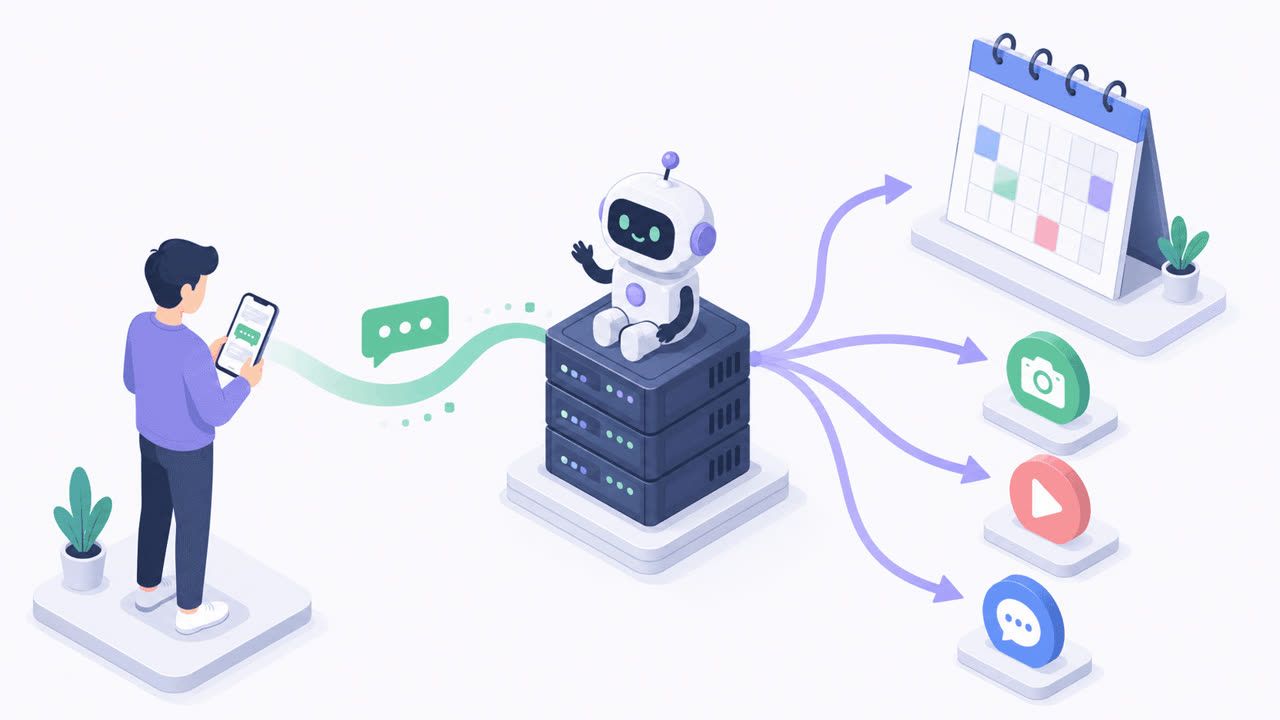
The setup is the same five minutes on all three:
Skill route (Hermes Agent and OpenClaw): install the postfast skill from ClawHub, published by @peturgeorgievv. On OpenClaw: openclaw skills install @peturgeorgievv/postfast. On Hermes: search ClawHub as a source (hermes skills search postfast --source clawhub) and install the result. The skill teaches your agent the full API: scheduling, media uploads, drafts, cross-posting, analytics, and follower history.
MCP route (all three, including NanoClaw): add the PostFast MCP server to your agent's MCP config:
mcp_servers:
  postfast:
    command: "npx"
    args: ["-y", "postfast-mcp"]
    env:
      POSTFAST_API_KEY: "your-api-key"
Get the API key from Workspace Settings after signing up (the 7-day free trial includes API access, no credit card). Full walkthroughs: Hermes Agent setup, OpenClaw setup, NanoClaw setup. If you automate with visual workflows instead, the n8n route does the same job with our official node.
Frequently Asked Questions
What is the main difference between Hermes Agent and OpenClaw?
Hermes Agent is a Python-based agent by Nous Research with a built-in learning loop that writes and improves its own skills, currently the number one app on OpenRouter. OpenClaw is the older, larger TypeScript project with 384k GitHub stars, 24 chat platforms, and the biggest skill marketplace (ClawHub). Both are free, MIT licensed, self-hosted, and support the same SKILL.md and MCP standards.
Is Hermes Agent free?
Yes. Hermes Agent is open source under the MIT license, and there is no license fee. You pay only for the AI model usage behind it: your own API keys, OpenRouter credits, or an optional Nous Portal subscription from Nous Research that bundles model access. Running it on a small $5 VPS is officially supported.
Can OpenClaw skills run on Hermes Agent?
Mostly yes. Both agents use the SKILL.md format from the Agent Skills open standard, and Hermes explicitly supports installing skills from ClawHub, OpenClaw's marketplace, as a built-in source. Skills that depend on OpenClaw-specific internals may need small tweaks, but standard skills, like the PostFast social media skill, work on both.
How do Hermes Agent and OpenClaw compare to Claude Code?
Different category. Claude Code is a coding agent that lives in your terminal and IDE and works sessions at a time, while Hermes Agent and OpenClaw are persistent personal assistants that run 24/7 on a server and talk to you through chat apps. Many people run both: Claude Code for programming, a persistent agent for everything else. If you want your coding agent to schedule social posts too, that works through the same MCP server.
Which is safer to run?
All three run with real system access, so the honest answer is: as safe as your habits. NanoClaw has the strongest default isolation (every agent in its own container). Hermes and OpenClaw both offer sandboxed execution modes and both scan marketplace skills after ClawHub's February 2026 malware incident forced the whole ecosystem to grow up. Whatever you run: install skills only from verified publishers, keep API keys in environment variables, and give your agent scoped keys, not master credentials.
The Bottom Line
Hermes Agent is the momentum pick, OpenClaw is the ecosystem pick, NanoClaw is the auditability pick. All three converged on the same open standards, which means your skills, your MCP servers, and your workflows move with you. Pick one, give it real work, and switch later if you outgrow it. The agents are ready. The only question left is what you delegate first.
Related
The PostFast MCP server for Claude and ChatGPT
Claude, ChatGPT, Cursor
Which Social Media Scheduler Has an API and an MCP Server for Claude and ChatGPT? PostFast, on Every Plan
PostFast: REST API and official MCP server on every plan, trial included. OAuth connector for ChatGPT and Claude, npx server for Claude Code and Cursor.

PostFast and OpenClaw: How to Schedule Social Media Posts with AI
Managing social media across multiple platforms is a time sink. Open the scheduler, pick your accounts, write the caption, upload media, set the time, repeat. Multiply that by every post, every week. It adds up fast.
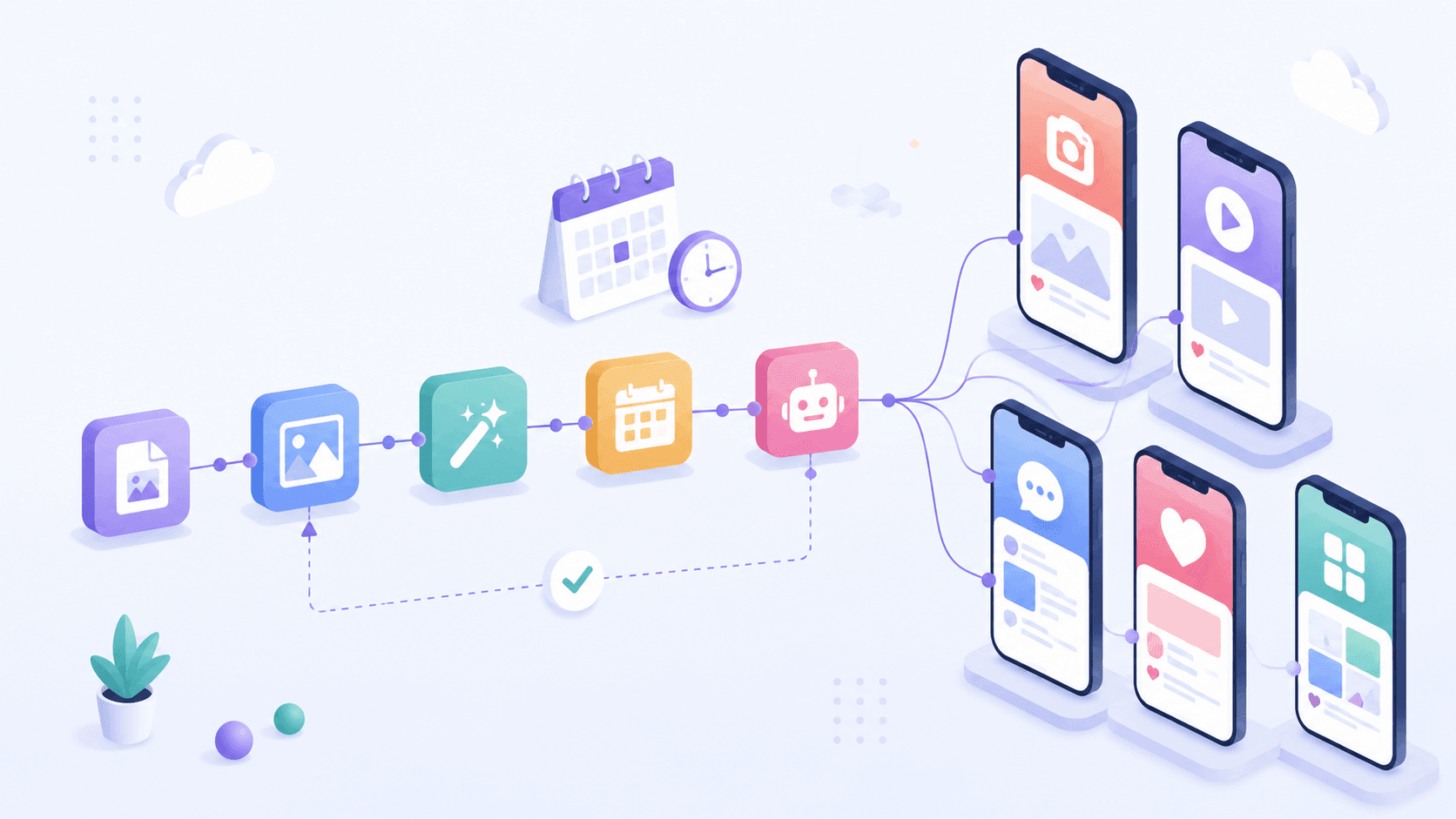
How to Automate Social Media Posting with n8n (Free Templates + Verified Node)
Automate social media posting with n8n: install the verified PostFast node, start from free templates, upload media, schedule carousels, and add approval.

How to Connect Claude to TikTok: Connector Setup, Videos, Photo Posts and Drafts
Connect Claude to TikTok with a connector: schedule videos and photo posts, pick a sound, send posts to TikTok drafts and answer comments from a chat.

Can ChatGPT Post to Instagram and Facebook? Yes, Here Is How
Yes, with a connected app. Use PostFast to schedule Instagram and Facebook posts, Reels and Stories from ChatGPT, with approval before publishing.