YouTube Monetization Requirements for 2027: Qualified Hours, Shorts Views, and a Posting Plan
YouTube's 2027 Partner Program rules explained: 8,000 qualified watch hours or 20 million Shorts views, what counts, and a posting plan to get there.
On this page (9)
Straight answer first: from February 1, 2027, a new channel needs 8,000 qualified watch hours in the last 365 days or 20 million qualified Shorts views in the last 90 days to join the YouTube Partner Program. Until then the bar is the one you already know: 1,000 subscribers plus 4,000 qualified watch hours in 12 months, or 1,000 subscribers plus 10 million qualified Shorts views in 90 days. Creators already in the program keep their status, with one exception: Shorts revenue sharing will need 10 million qualified Shorts views per 90 days.
YouTube announced the changes on August 10, 2026, calling them the first significant update to the program since 2018. Guides written before August 2026 quote the old numbers. This guide lays out the actual YouTube monetization requirements as they stand in September 2026, what "qualified" really means, and the posting math that gets a channel over either line.
YouTube monetization requirements at a glance (September 2026)
| Requirement | Until January 31, 2027 | New applicants from February 1, 2027 |
|---|---|---|
| Long-form route | 1,000 subscribers + 4,000 qualified watch hours in the last 12 months | 8,000 qualified watch hours in the last 365 days |
| Shorts route | 1,000 subscribers + 10 million qualified Shorts views in the last 90 days | 20 million qualified Shorts views in the last 90 days |
| Subscriber minimum | 1,000 | Not mentioned in YouTube's announcement; the help center still lists 1,000 as of September 2026 |
| Shorts revenue sharing (existing members) | Included for YPP members today | Requires 10 million qualified Shorts views per 90 days |
| Fan Funding and Shopping entry thresholds | Unchanged | Unchanged |
Two things stand out. The watch-hour bar doubles and the Shorts-view bar doubles, and both are measured on qualified activity, a definition YouTube spelled out two days after the announcement. Read that section before you plan anything, because private uploads, unlisted uploads, ad views, and looped Shorts count for nothing.
Sources for every number on this page: YouTube's announcement of August 10, 2026 on the official YouTube blog, the "qualified watch hours and Shorts views" explainer of August 12, 2026, and the YouTube Partner Program overview in the YouTube Help Center, all checked on September 2, 2026.
What changes on February 1, 2027
YouTube bundled three changes into one date. Creators can review and sign the new terms in YouTube Studio, and the help center asks existing members to accept them by January 31, 2027 to keep monetizing fully.
1. Premium Lite everywhere
Premium Lite expands to every country that has YouTube Premium. Creators earn from subscriptions through a dedicated revenue pool per subscription type: 30% of net subscription revenue for Premium and 60% for Premium Lite, distributed by member watch time and views. From that distribution, creators receive 55% for long-form videos and 45% for Shorts. YouTube says that when a user signs up for Premium, partners on average earn more than when that user was watching ads, based on 2026 performance.
2. A new bar for Shorts revenue
From February 1, 2027, Shorts ads and subscription revenue sharing require 10 million qualified Shorts views in the last 90 days. Channels below the line stay in the program and keep earning on long-form content. Shorts revenue sharing switches back on automatically once the channel crosses 10 million again. For channels under the threshold, YouTube says new initiatives will introduce ways to earn based on hitting certain milestones, such as bonuses for YouTube Shopping, incentives for brand deals, and earnings boosts for starting and growing trends. No amounts have been published yet.
3. Higher entry thresholds for new creators
New applicants need 8,000 qualified watch hours in the last 365 days or 20 million qualified Shorts views in the last 90 days. YouTube ties the change to the platform's scale, quoting more than 200 billion daily Shorts views and more than a billion hours of daily watch time on TV screens. The thresholds for Fan Funding and shopping products do not change, and the update does not affect creators already in the program.
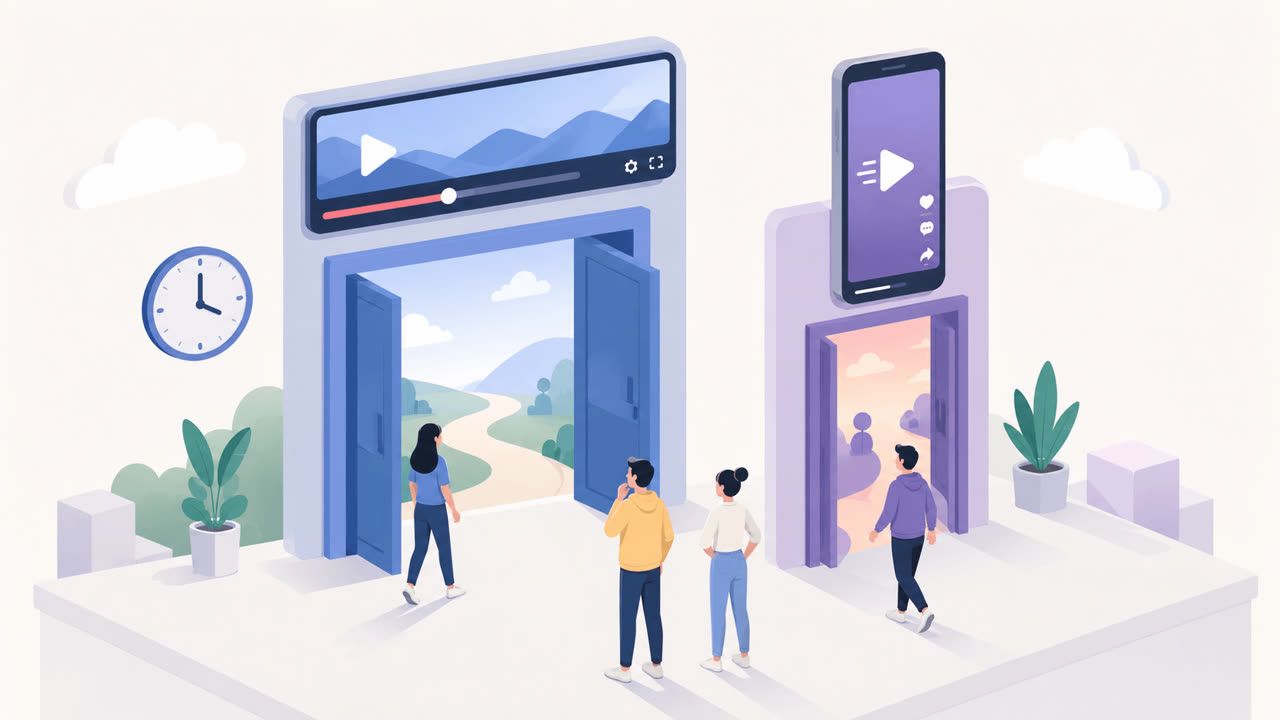
What "qualified" means, and what silently does not count
This is the part that trips people up. YouTube counts a narrow slice of your watch time and views toward the thresholds.
Qualified watch hours
Qualified watch hours come from public long-form videos, including podcasts, and archived livestreams. The following never count:
- Private videos
- Unlisted videos
- Deleted videos
- Videos watched as an ad
- Shorts watch hours
- Livestreams that are not archived as public videos
If your channel leans on unlisted uploads for clients or a members-only workflow, that time is invisible to the threshold.
Qualified Shorts views
Qualified Shorts views come from public Shorts and must be engaged views: the viewer stayed past the initial seconds, and loops do not count. You can check engaged views per video in YouTube Analytics. The following never count:
- Private, unlisted, or deleted Shorts
- Shorts viewed as an ad
- Long-form video views
- Image posts that appear in the Shorts feed
Views vs engaged views since August 24, 2026
Since August 24, 2026, YouTube counts a public "view" from the first frame across every format, so more plays register as views than before. The old definition is now called an engaged view, and engaged views are still what qualifies you to earn. Monetization thresholds, CTR, average view duration, retention, and recommendations did not change. A hovering autoplay on a thumbnail is now a view; a click, or watching past the initial seconds, is an engaged view.
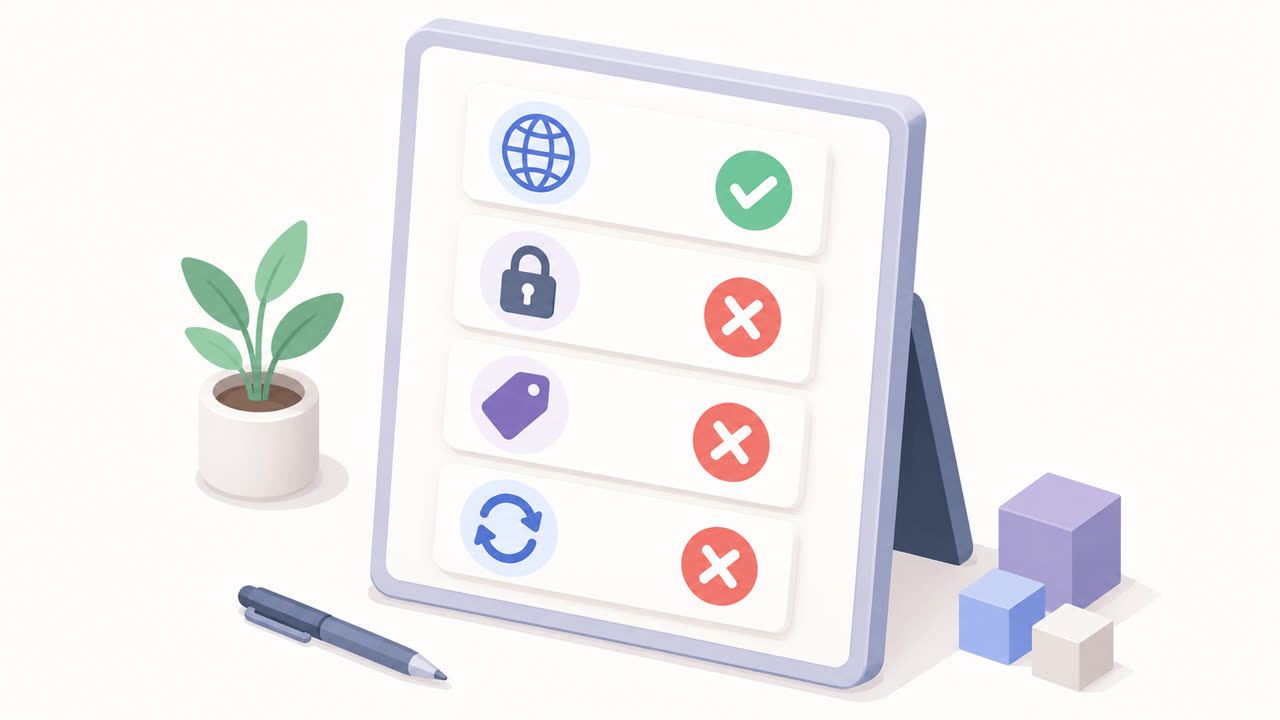
The requirements nobody talks about
Meeting a threshold puts you in the review queue. It does not admit you. The help center lists the rest:
- Follow the YouTube channel monetization policies
- Live in a country or region where the Partner Program is available
- No active Community Guidelines strikes on the channel
- 2-Step Verification turned on for the Google account
- Advanced features access on YouTube
- One active AdSense for YouTube account linked to the channel
You apply in YouTube Studio under Earn, accept the base terms, link AdSense, and wait. YouTube says a decision typically takes about a month. If the answer is no, you can appeal within 21 days or re-apply after 30 days, and after 90 days if it was not your first rejection. Channels that do not upload or post for 6 months or more can have monetization turned off.
The math: what you need to publish
Turning the thresholds into a weekly plan is more useful than staring at the totals. The figures below are arithmetic on YouTube's numbers, using average engaged view duration as the variable you control with content quality.
Long-form: 8,000 qualified hours in 365 days
8,000 hours is 480,000 minutes, or about 1,315 qualified minutes every day for a year (the current 4,000-hour bar is about 658 minutes a day).
| Average engaged view duration | Qualified views needed per day | Per year |
|---|---|---|
| 2 minutes | 658 | 240,000 |
| 4 minutes | 329 | 120,000 |
| 8 minutes | 164 | 60,000 |
| 15 minutes | 88 | 32,000 |
Longer formats do the heavy lifting. A 40-minute podcast episode that holds people for 15 minutes needs a fraction of the plays that a 3-minute tip video needs, and archived livestreams count too.
Shorts: 20 million qualified views in 90 days
20 million views in 90 days is about 222,000 qualified views every day, or 1.56 million a week. Because the window is rolling, what matters is the sum across every public Short you have live.
| Shorts published in the 90-day window | Average qualified views needed per Short |
|---|---|
| 30 (one every 3 days) | 667,000 |
| 90 (daily) | 222,000 |
| 180 (twice a day) | 111,000 |
| 270 (three a day) | 74,000 |
For existing members keeping Shorts revenue sharing, the 10 million bar halves every figure in the table: about 111,000 qualified views a day.
A posting plan that respects both routes
- Decide the route before you plan the content. A channel built on 10-minute explainers should chase watch hours. A channel built on 30-second clips should chase engaged Shorts views. Splitting effort across both usually means missing both.
- Keep everything public. Unlisted and private uploads earn nothing toward either threshold. If you must hide something, hide it after it has accumulated its time.
- Archive every livestream as a public video. It is the cheapest qualified watch time on the platform.
- Publish on a fixed cadence and batch the work. Two long-form videos a week plus a daily Short is a common shape. Schedule the batch in one sitting so the cadence survives busy weeks. PostFast schedules both standard videos and Shorts, keeps titles under YouTube's 100-character cap, attaches a custom thumbnail (1280 by 720, up to 2 MB, phone-verified channel required), and can post an automatic first comment right after publishing.
- Set the format deliberately. Choose Short or standard video when you upload; through the PostFast API, YouTube uploads default to Shorts, so switch the flag off for long-form uploads so a 12-minute video does not go out as a Short.
- Reuse the vertical clips. Every Short you schedule can go to TikTok, Instagram Reels, and Facebook Reels in the same batch, which is where a new channel's audience often comes from.
- Check engaged views, not views. After the August 24 change, the headline view count flatters you. The number that qualifies is in Analytics under engaged views.
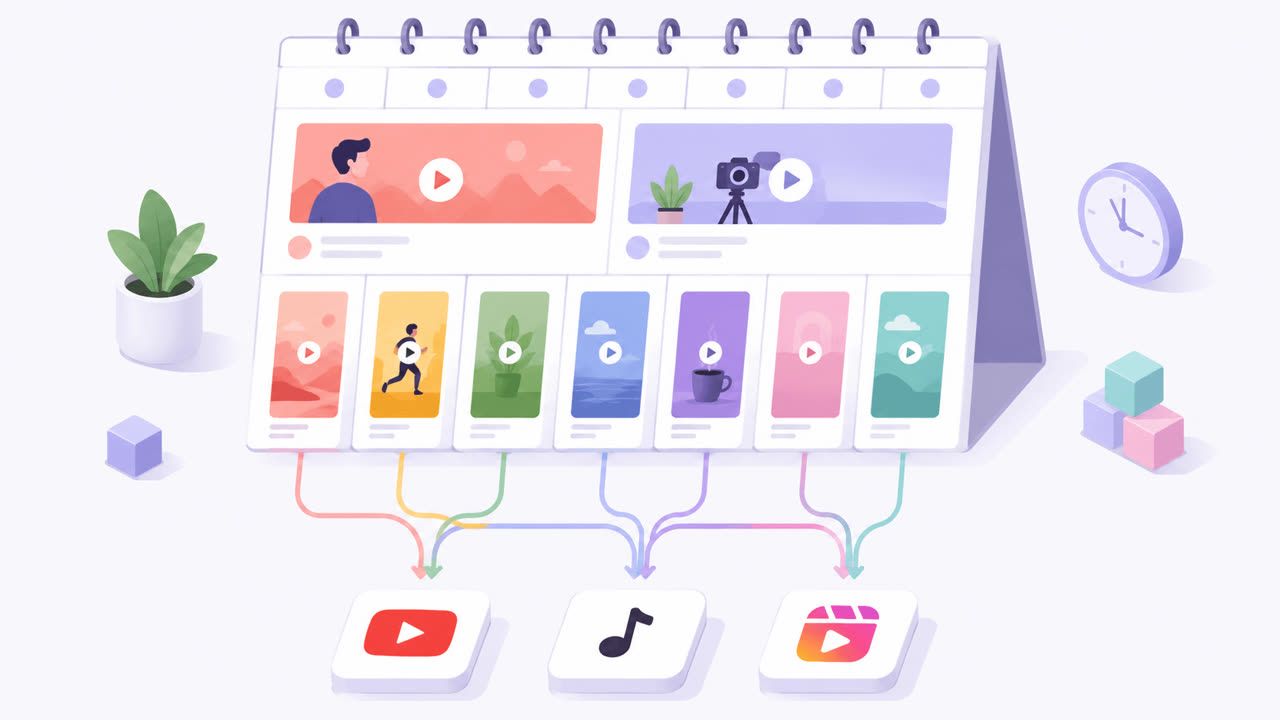

Shorts or long-form: which route is faster for a new channel?
Honest answer: it depends on what you can produce every week without burning out.
The long-form route rewards depth. Podcasts, tutorials, and archived streams generate qualified hours while you sleep, and a library of 40 evergreen videos keeps compounding. The drawback is production time. 8,000 hours is a year-long grind for most solo creators.
The Shorts route rewards volume and hooks. 20 million engaged views in 90 days is a large number, but Shorts can pull that from a few breakout clips, and every clip doubles as TikTok and Reels content. The drawback is that loops and image posts do not count, so a "viral" Short with heavy looping may qualify far fewer views than its counter suggests.
If you post daily Shorts and one long-form video a week, you build both meters at once, and the long-form library is what keeps paying after you are in.
Already in YPP? What you keep and what changes
- You keep your status. YouTube says the new entry thresholds "won't impact creators already in YPP."
- Shorts revenue needs the 10 million bar. Below it, Shorts ads and subscription revenue pause and resume automatically when you cross it again. Long-form revenue continues.
- Sign the new terms. They are in YouTube Studio; the help center asks for acceptance by January 31, 2027.
- Watch the incentive programs. Shopping bonuses, brand-deal incentives, and trend boosts are promised for channels under 10 million Shorts views, with details still to come.
- Stay active. Six months without an upload or a post can cost you monetization regardless of your history.
If you also publish on TikTok, the thresholds there work differently. Our guides to the TikTok monetization requirements and how many followers you need on TikTok to get paid cover that side, and the best time to post on YouTube guide helps you place the schedule.
Frequently Asked Questions
Do I still need 1,000 subscribers to get monetized on YouTube in 2027?
YouTube's August 10, 2026 announcement lists only the watch-hour and Shorts-view thresholds for new applicants and says nothing about the subscriber requirement. As of September 2026 the help center still lists 1,000 subscribers alongside the current thresholds. Plan for 1,000 until YouTube says otherwise.
Do unlisted or private videos count toward the 4,000 or 8,000 hours?
No. Only public long-form videos, including podcasts, and archived livestreams count. Private, unlisted, and deleted videos, ad views, and Shorts watch time are excluded.
Do Shorts watch hours count toward the long-form threshold?
No. Watch time from the Shorts feed never counts toward the 4,000-hour or 8,000-hour bar. Shorts have their own threshold measured in qualified views.
Did the August 24, 2026 view-count change make it easier to qualify?
No. Public views are now counted from the first frame, so more plays register as views, but the Partner Program is based on qualified views, which are engaged views without loops. The bar did not move.
If I get accepted before February 1, 2027, do I keep monetization?
Yes. YouTube states the update does not affect creators already in the program. The one condition that applies to everyone is the 10 million qualified Shorts views per 90 days for Shorts revenue sharing.
How long does the YPP review take?
YouTube says a decision typically arrives in about a month after you accept the terms and link AdSense, and warns that delays are possible during higher-than-usual application volumes. Rejected channels can appeal within 21 days or re-apply after 30 days.
Plan the year, then schedule the week
The 2027 rules reward channels that publish public content on a steady cadence for a long time. Pick your route, do the arithmetic above for your own average view duration, and put the schedule on autopilot with PostFast.
Related
YouTube scheduling with PostFast
Shorts and full videos
Schedule YouTube Shorts From Desktop and Cross-Post Without Extra Work
Schedule YouTube Shorts from desktop with PostFast. Batch a week, cross-post to TikTok and Instagram Reels, and keep a steady flow without extra exports.
A Creator's Guide to Safely Downloading Your YouTube Videos
Learn safe and legal ways to download from YouTube videos you own. Turn your content into powerful social media posts and grow your audience.
YouTube Dimensions in 2026: Video, Shorts, Thumbnail and Banner Sizes in One Place
Every YouTube dimension that matters in 2026: video resolutions and aspect ratios, Shorts sizing, thumbnail and banner specs, plus safe areas, all with links to exact per-format spec sheets.

6 Best YouTube Shorts Editors in 2026
Looking for a YouTube Short editor? Find the best editing software for YouTube Shorts in 2026 for faster cuts, captions, reframing, and export.
Can ChatGPT Post to Instagram and Facebook? Yes, Here Is How
Yes, with a connected app. Use PostFast to schedule Instagram and Facebook posts, Reels and Stories from ChatGPT, with approval before publishing.